
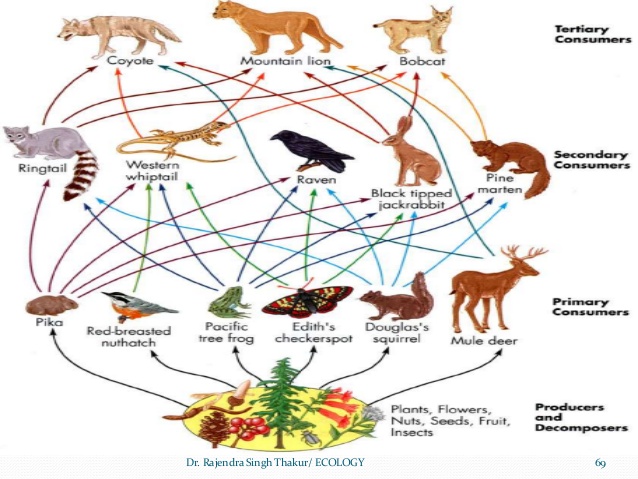
The philosopher Carlo Sini has simplified the problem of biodiversity decline by stating that it is a disequilibrium between “prey” and “predators” that in the long run will cause the collapse of an entire ecosystem.

It is a set of living organisms of plants and animals (including humans) that interact with each other and with the environment in which they are located.
These communities, divided into several populations made up of organisms of the same species, then interact with the component of non-living elements, organic and inorganic, as well as with climatic factors, thus forming the ecosystem.
In the component of living organisms, we find primary consumers (insects and animals) that are herbivores. In turn, primary consumers are prey to secondary + tertiary consumers (carnivorous predators, including humans).
The last component is that of decomposers (fungi and bacteria), which will break down both primary consumers and secondary consumers, turning them into inorganic compounds that fertilize the earth and then re-enter the cycle.
On the other hand, an ecosystem is defined as fragile or not very resilient (*) if it has a low level of biodiversity (animal, plant, etc.) because it is weaker in cases of environmental stress.
Starting from our personal ethical and respectful conduct, we can already produce small changes. Evidently, sensitivity must be taught within the family nucleuses: the children of future generations must know what the consequences will be if Man will continue to behave in such a way as to put the entire planet at risk!
Material that deals with this topic is in the pages of every newspaper and magazine, they talk about it on television, many dystopian films show us terrifying and nightmare scenarios.
But it is also true that real wisdom is a “something” that cannot be bought or borrowed: it is within the awareness of human effemerity linked to karma and to the law of cause and effect. I dare to state that it is only unconditional LOVE and RESPECT to every living and non-living form.
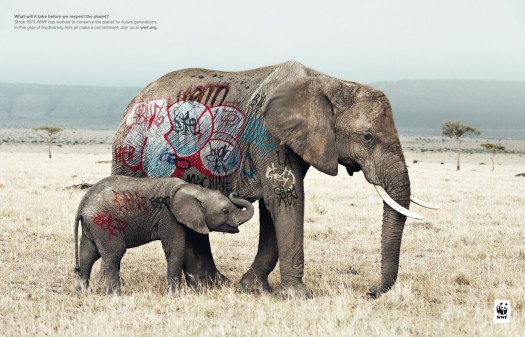
What will it take before we respect the planet?
…oOo…
Il filosofo Carlo Sini ha semplificato il problema della diminuzione di biodiversità affermando che si tratta di un disequilibrio tra “prede” e “predatori” che a lungo termine provocherà il collasso di un intero ecosistema.
Ma cos’è un ecosistema, anche chiamato unità ecologica?
È un insieme di organismi viventi vegetali e animali (compreso l’uomo) che interagiscono tra loro e con l’ambiente nel quale si trovano.
Queste comunità suddivise in più popolazioni costituite da organismi della stessa specie, interagiscono poi con la componente di elementi non viventi, organici e inorganici, come pure con fattori climatici formando quindi l’ecosistema.
Nella componente degli organismi viventi, troviamo i consumatori primari (insetti e animali) che sono erbivori. A loro volta i consumatori primari sono preda dei consumatori secondari e terziari (predatori carnivori incluso l’uomo).
L’ultima componente è quella dei decompositori (funghi e batteri), che procederanno a scomporre sia consumatori primari che consumatori secondari, trasformandoli in composti inorganici che fertilizzano la terra per rientrare poi di nuovo nel ciclo.
Un ecosistema è in equilibrio quando la catena del ciclo alimentare si chiude e quando le interazioni fra gli organismi viventi funzionano in modo da regolare il delicato meccanismo di un ecosistema all’interno di una regione.
Per contro un ecosistema si definisce fragile o poco resiliente(*) se presenta un basso livello di biodiversità (animale, vegetale ecc.) poiché più debole nei casi di stress ambientali.
Le attività antropiche, specialmente nelle zone con grande densità demografica e forte edificazione, hanno avuto quale risultato una rilevante diminuzione della popolazione d’insetti e di volatili, che a loro volta nella catena alimentare producono una decrescita di predatori ecc.
Partendo dalla nostra personale condotta etica e rispettosa dell’ambiente, possiamo già produrre dei piccoli cambiamenti. Evidentemente, la sensibilità va insegnata all’interno dei nuclei famigliari: i figli delle generazioni future devono sapere quali saranno le conseguenze se l’Uomo seguiterà ad assumere dei comportamenti tali da mettere a rischio l’intero pianeta!
Materiale che tratta quest’argomento è nelle pagine di ogni giornale e rivista, se ne parla alla televisione, molti film distopici ci mostrano scenari terrificanti e da incubo.
Ma è anche vero che la reale saggezza è un “qualcosa” che non si può acquistare o prendere a prestito: è all’interno della consapevolezza dell’effimerità umana legata al karma e alla legge della causa-effetto. Oso affermare che è solo AMORE incondizionato e RISPETTO verso ogni forma vivente e non.
(* fonte Wikipedia) la resilienza in ecologia è la velocità con cui un sistema ecologico ritorna al suo stato iniziale, dopo essere stato sottoposto a una perturbazione che l’ha allontanatala da quello stato. Le alterazioni possono essere causate sia da eventi naturali che da attività dell’uomo.
 Claudine Giovannoni
e sì si rischia la catastrofe se le attività umane continuano a interferire pesantemente con l’ambiente.
Purtroppo la “catastrofe” è già iniziata ed è amara realtà in molti paesi, da ultimo sulle Hawaii. Sembra chiaroveggenza, nel mio romanzo d’esordio Il Kumihimo del Sole, parlavo proprio di quelle isole e del grande Haleakalâ su Maui (il gigante dormiente) che si risvegliava… In realtà è ora il Kilauea a creare problemi… Ahh la fantasia! Un abbraccione :-)c
la fantasia può diventare realtà e un vulcano è sempre un vulcano.
Un grande abbraccio
Everything is interconnected, break one link in the chain and every living thing suffers, people forget will will too. There are so many creatures on earth, homo sapiens are but one, yet we dominate and destroy the earth…
People are waking up, slowly but surely, let’s hope it’s not too late! Loved this post!xxx
I guess you’re right. People start getting more and more attentive about environment protection. That’s a good start. Some more are finally conceiving the possibility to became vegetarian or even vegan. And that will change for good our future! Hugs and kisses :-)c