

Below, a descriptive pod-cast article from “The Guardian” dd. October 27th, 2023 regarding whaling (minke whales) in Iceland, which along with Norway and Japan, are the nations in which the practice is still allowed.
With a 90 percent decline in the cetacean population, the entire marine ecosystem is severely threatened and they are facing extinction.
Kristján Loftsson has stubbornly refused to bow to public opinion or an overwhelming international consensus against whaling. But with a full ban coming in Iceland, has he killed his last whale?
Among those pushing for a full ban is Valgerður Árnadóttir, a longtime activist. She says that aside from her moral objections, whaling is not profitable and harms Iceland’s international reputation as well as its tourism and film industries.
In the face of protests from environmentalists, political pressure and a near universal global consensus, whale hunting is still legal in Iceland, where it is carried out by a single company. Hvalur was inherited by a man named Kristján Loftsson, 80, who rarely speaks to the international media, but this month he invited the Guardian’s chief reporter, Daniel Boffey, to visit.
As Boffey tells Nosheen Iqbal, Loftsson is in effect Iceland’s last whaler, and with his five-year permit expiring in the coming weeks, he could have killed his last whale. A new bill is being debated in the Icelandic parliament that would ban the practice.
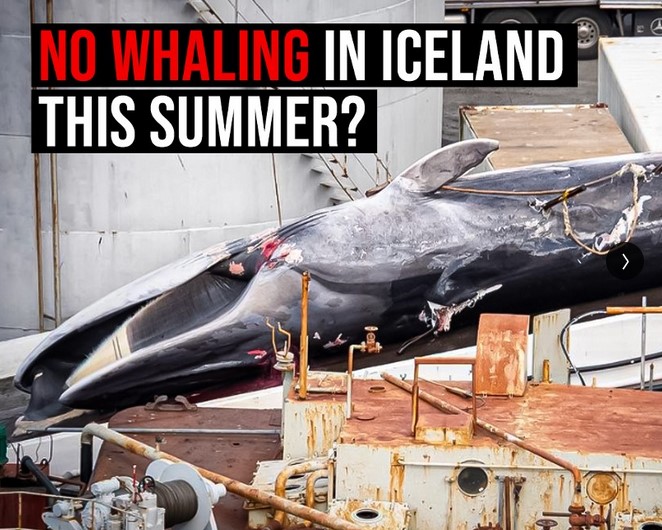
© picture Sea Shepherd
Articolo pod-cast del “The Guardian” del 27.10.2023 inerente la caccia alla balena (balenottere) in Islanda, che assieme alla Norvegia ed al Giappone, sono le nazioni nelle quali è ancora concessa questa pratica.
Con una diminuzione del 90% della popolazione di cetacei, l’intero ecosistema marino è fortemente minacciato ed esse sono in periodo d’estinzione.
Kristján Loftsson si è ostinatamente rifiutato di piegarsi all’opinione pubblica o allo schiacciante consenso internazionale contro la caccia alle balene. Ma con l’arrivo di un divieto totale in Islanda, ha ucciso la sua ultima balena?
Tra coloro che spingono per un divieto totale c’è Valgerður Árnadóttir, un’attivista di lunga data. A parte le sue obiezioni morali, la caccia alle balene non è redditizia e danneggia la reputazione internazionale dell’Islanda e le sue industrie turistiche e cinematografiche.
Di fronte alle proteste degli ambientalisti, alle pressioni politiche e a un consenso quasi universale, la caccia alle balene è ancora legale in Islanda, dove è praticata da un’unica azienda. Hvalur è stata ereditata da un uomo di nome Kristján Loftsson, 80 anni, che raramente parla con i media internazionali, ma questo mese ha invitato il capo reporter del Guardian, Daniel Boffey, a visitarla.
Come racconta Boffey a Nosheen Iqbal, Loftsson è a tutti gli effetti l’ultimo baleniere islandese e, con la scadenza del suo permesso quinquennale nelle prossime settimane, potrebbe aver ucciso la sua ultima balena. Il parlamento islandese sta discutendo una nuova legge che vieterebbe questa pratica.

 Claudine Giovannoni
Una pratica suicida quella della caccia alle balene. Quando sono estinti questi magnifici animale cosa resterà? Direi il nulla. Fra le altre cose la caccia non procura guadagni. Due motivi per dire basta.
Una abbraccio.
O.T. Tutto bene?
Quando finalmente la scorsa estate avevamo deciso di vedere l’Islanda, ero convinta che la caccia alla balena fosse stata bandita. Era da anni che mi sarebbe piaciuto andarci, ma ammetto che cerco di boicottare posti dove la pratica della carneficina a povere creature è legalizzata. Forte abbraccio anche a te :-)cg
Fai bene a boicottare quei posti.
Un grande abbraccio